Decision-grade biotech artifacts.
PhocaX starts with one therapeutic thesis or program question and turns it into evidence-separated materials, gates, and owner-ready next steps.
Decision-support only. Final vendor selection stays with the client.
Scope, shortlist logic, RFI questions, red flags, and a kickoff path before vendor calls start multiplying.
Check fitFor a skeptical buyerThe page shows the shape of the work so credibility comes from the packet, not broad consulting language.
Inspect proofFor a decision ownerProject type, timeline, vendor category, and decision owner are enough to shape a first useful response.
Start intakeThe first reason to care is practical: a cleaner biotech vendor decision. The reason to keep watching is deeper: PhocaX is building a software-backed operating layer that turns one therapeutic thesis or program question into reviewable evidence, validation gates, outsourced execution plans, readiness packets, and owner-ready next steps.
PhocaX starts with one therapeutic thesis or program question and turns it into evidence-separated materials, gates, and owner-ready next steps.
The work is structured through software, worker agents, evidence logs, validation gates, and review packets instead of loose consulting alone.
The long-term direction is infrastructure that supports thesis, evidence, validation, outsourced execution, and readiness workstreams for review.
PhocaX outputs are planning and decision-support materials. They are not clinical, regulatory, legal, IP/FTO, investment, procurement, quality-system, medical, or therapeutic-efficacy advice.
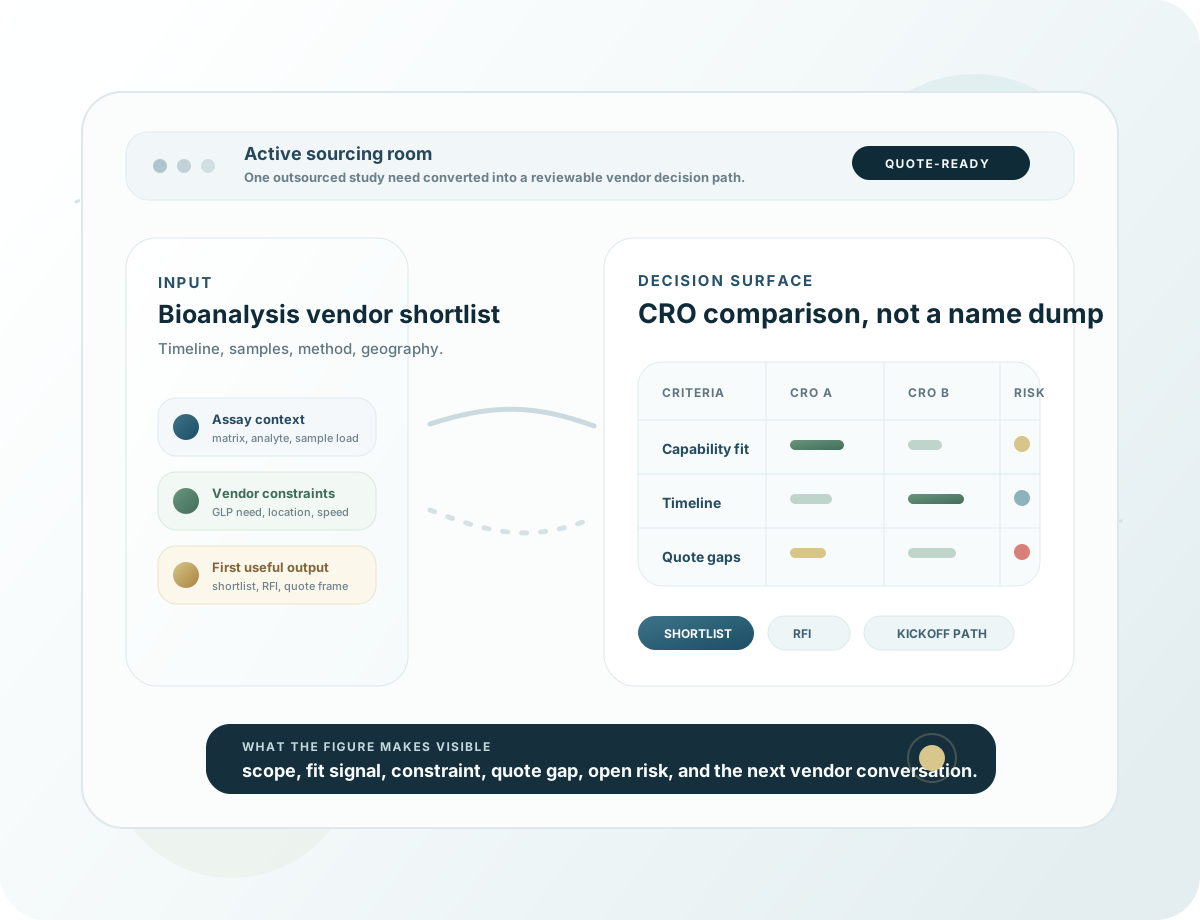
The demo packet shows the working structure PhocaX uses for one active preclinical or translational outsourcing need: vendor-ready scope, fit criteria, shortlist logic, RFI questions, comparison matrix, red-flag log, recommendation note, and kickoff checklist.
A study, assay, or outsourced workstream is real, but the team is still juggling scattered vendor names, incomplete criteria, and unclear next questions.
The first pass turns the need into a sourcing brief, vendor landscape, comparison matrix, RFI path, quote-review frame, and kickoff checklist.
The decision owner can see who fits, what is still risky, what to ask first, and how to move toward a vendor conversation without restarting the search.
What exactly needs to be outsourced?
Which vendors can credibly do it?
What should be asked before a quote?
What has to clear before kickoff?
Vendor names in a spreadsheet
Fit, constraint, risk, and next-question viewVague intro calls
Context-rich RFI and quote requestDecision owner rebuilding the search
Founder-readable memo and next-step pathThe demo packet is an example scenario showing format and workflow. It is not a client case study, therapeutic recommendation, clinical validation, vendor endorsement, vendor ranking, regulatory review, quality audit, IP/FTO opinion, legal review, investment recommendation, procurement approval, or guarantee of therapeutic, vendor, regulatory, funding, or commercial outcomes.
The strongest first pass is not a broad procurement project. It is one live outsourcing decision with enough context to turn scattered options into a cleaner vendor path.
Start the scoped briefThe team can name the assay, study, package, or external support lane and why the next vendor conversation matters now.
Timing, sample, method, geography, budget, quality, procurement, or approval limits are visible enough to shape fit.
Scope cleanup, shortlist research, RFI support, quote comparison, or a kickoff checklist would save real operator time.
PhocaX is not trying to look like a marketplace, analyst firm, or full-service consultancy. The offer is narrower: make one science-vendor decision easier to inspect before the team spends more time.
The work starts from the experimental aim, readout, sample path, controls, model system, and what a credible vendor answer should clarify.
The first pass is intentionally narrow: one decision, a visible approval path, and an artifact the team can forward, edit, or use in the next call.
PhocaX can organize vendor evidence and decision questions, but it does not replace scientific, quality, legal, procurement, or sponsor judgment.
This is decision-support infrastructure, not vendor brokerage, vendor certification, legal advice, quality assurance, regulatory advice, or procurement authority.
Cleaner boundaries make the service easier to buy. If the problem is too vague, too early, or asks PhocaX to act as the decision authority, the right move is to narrow the ask before starting.
If the ask is general strategy, company positioning, or open-ended research, it needs narrowing before a PhocaX sourcing pass is useful.
The best first packet needs enough project shape to compare fit. A blank vendor search creates noise, not leverage.
PhocaX can make the comparison surface cleaner. Final vendor selection, contracting, quality review, and kickoff authority stay with the client.
If the need is not ready, the first useful response can still be a narrower intake question rather than a forced project.
A CRO and research-vendor sourcing sprint for emerging biotech teams. Scope the need, compare the field, and move into a reviewable vendor conversation.
Define the outsourced study, assay, vendor category, timeline, constraints, current options, and decision owner.
The team stops asking every vendor a different version of the problem.
Scope briefBuild a vendor landscape around the real work: likely-fit CROs, specialist labs, no-go paths, geography, quality signals, and first questions.
The buyer can see where the search is strong, thin, or wasting time.
Vendor matrixTurn vendors, quotes, assumptions, risks, and open questions into a side-by-side view the team can actually review.
The next call becomes a decision conversation, not another discovery loop.
Quote/RFI comparisonPackage the recommendation, RFI questions, contact sequence, kickoff checklist, and approval blockers.
The client knows who to contact, what to ask, and what must clear before work starts.
Decision memoThe first engagement works when the work is specific: preclinical assay development, bioanalysis, DMPK, tox, translational evidence, or another vendor category that needs a real shortlist, cleaner comparison, and defensible next vendor step now.